
《女性不是天生的》一次结构性阅读与讨论 “Women Are Not Born That Way”: A Structured Reading and Discussion Session
金宇飞|艺影视界

《女性思想空间》此次文本计划,围绕西蒙娜·德·波伏瓦的《第二性》展开话题结构性阅读与讨论。
旨在建立一个:“女性主体性的结构化训练场”。
This edition of Women’s Thought Space centers on Simone de Beauvoir’s The Second Sex, using the text as a framework for structured reading and thematic discussion.The project aims to create “a structured training ground for cultivating women’s subjectivity.”
学术顾问|Academic Advisor
郭桢/Guo Zhen
学术支持|Academic Support
郑晓洁/Zhen Xiaojie
结构策化与主持/海报制作与内容排版|Curator & Design
谢雯/Xie Wen
媒体支持|Media
华人女性主义艺术家联盟/艺影视界
参与艺术家|Artists
郭桢/Guo Zhen
黄梅/Huang Mei
若水/Ruoshui
范轶西/Fan Yixi
于颖/Yu Ying
谢雯/Xie Wen
南波腕/Nanbowan
日月星辰/Riyuexingchen
《女性思想空间》项目宣言
Women’s Thought Space — Project Manifesto
郭桢/Zhen Guo
这种学习和讨论,对我们现在的女性艺术家是很重要的,理论上的提高可以帮助我们艺术方面的进一步开拓。 在当代艺术的范畴里,思想的高度,决定了你的艺术的高度。人生是有限的,能够明白的度过你有限的人生,是一种无限的精神享受。
This kind of study and discussion is especially important for women artists today. A deeper engagement with theory can help us expand the possibilities of our artistic practice and open new directions for exploration.
Within the field of contemporary art, the depth of one’s thinking shapes the depth of one’s art. Life is finite. To live one’s limited life with clarity and understanding is, in itself, a form of boundless spiritual fulfillment.
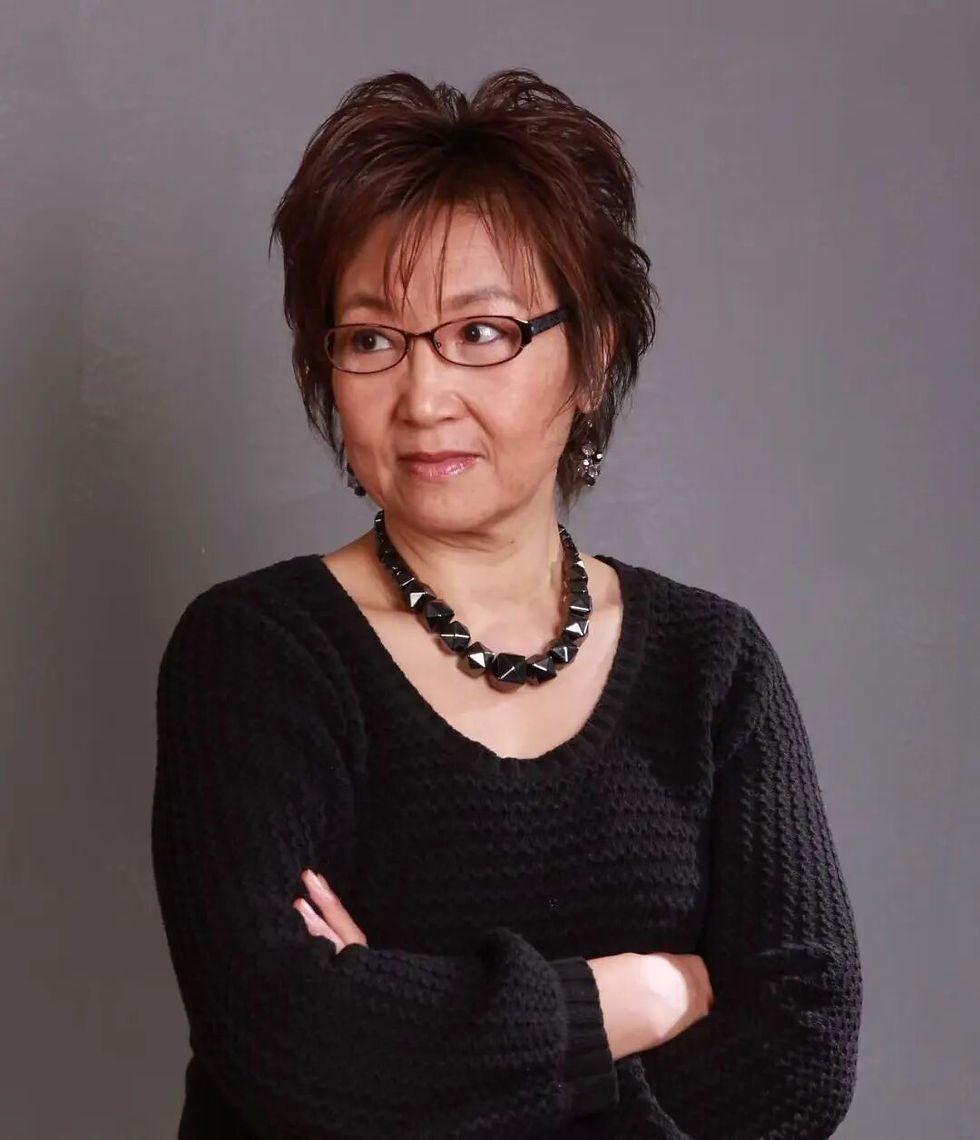
1955年出生于山东日照,职业艺术家,美国亚裔当代女性水墨艺术开拓者。现任华人女性主义艺术家联盟创始人兼CEO,并为多个艺术协会会员及多所大学客座教授。
Born in Rizhao, Shandong, in 1955, she is a professional artist and a pioneer of contemporary Asian-American women’s ink art in the United States. She is currently the founder and CEO of the Alliance of Chinese Feminist Artists, as well as a member of several art associations and a visiting professor at multiple universities.
波伏娃,第二性 417页: “十八世纪对此也有分歧。一七四四年,在阿姆斯特丹,《关于女人灵魂的争论》的作者宣称:“仅仅为了男人才创造出来的女人,在世界末日到来时不会再存在,因为女人对于为此而创造的对象不再有用了,因此必然得出,女人的灵魂不是不朽的。”卢梭作为资产阶级的代言人,以不那么彻底的方式让妻子为丈夫和母性作奉献。他断言:“女人所接受的全部教育应该与男人相关……女人生是向男人让步的,并且忍受不公正。”
Simone de Beauvoir, The Second Sex, p. 417
“There were also differences of opinion on this in the eighteenth century. In 1744, in Amsterdam, the author of The Debate on the Soul of Women declared: ‘Woman, who was created only for man, will no longer exist when the end of the world comes, because woman will no longer be useful to the object for which she was created. Therefore, it must necessarily be concluded that the soul of woman is not immortal.’ Rousseau, as a spokesman for the bourgeoisie, in a less thorough way, made the wife devote herself to her husband and to motherhood. He asserted: ‘All the education that women receive should be related to men… Woman is born to yield to man and to endure injustice.’”
(那个时期的对女性的理解主要是来源于基督教的影响。和女性是上帝用男人的肋骨做成,而专于扶持男性社会的理念相辅相成。——郭桢)
(The understanding of women during that period mainly came from the influence of Christianity. It complemented the idea that woman was made by God from man’s rib and was specifically meant to support male society. — Zhen Guo)
然而,十八世纪的民主思想和个性自由思想对女人是有利的;在大多数哲学家看来,女人是与男性同等的人。伏尔泰揭露她们命运的不公正。狄德罗认为她们的弱势大部分是社会造成的。他写道:“女人啊,我为你们抱屈喊冤!”他认为:“在一切习俗中,民法的残酷与自然的残酷联合起来对付女人。她们受到蠢人一样的对待。”
“However, the democratic ideas and ideas of individual freedom of the eighteenth century were favorable to women; in the view of most philosophers, women were human beings equal to men. Voltaire exposed the injustice of their fate. Diderot believed that most of their disadvantaged position was caused by society. He wrote: ‘Women, I cry out against injustice for you!’ He believed: ‘In all customs, the cruelty of civil law joins with the cruelty of nature in acting against women. They are treated like fools.’”
(这些声音在当时也是极为罕见的。社会文明在向开明的方向发展, 但是距离女性的解放还差的很远, 只是一些微弱的感性认知而已。)
(These voices were also extremely rare at that time. Social civilization was developing in an enlightened direction, but it was still very far from the liberation of women. These were only some weak perceptual understandings.)

独立艺术家/中国
Independent Artist / China
女人长相的美与丑,只对自己负责,不对祖国、族群、社会、任何个体甚至男性负责。她们出于自身喜好愿意取悦任何人,则另当别论。所以,作为男性以个人审美与好恶去评判全体中国女性,有失风度与体面。不要把造成国家衰亡、社会失序、道德沦丧的帽子强行压在女性头上,更以"婊子"等词语亵渎。即便芸芸小民,也应以尊重女性为基本修养守则,彬彬有礼相待。而读万卷书深谙历史真相又追求民主自由且有理想宏愿者,深知女性遭受压迫、屈辱与不公后,理应产生变革与忧患意识,更有拯救她们于水火,将文明理性之光传递于其思想灵魂的坚定抱负,而非一味指责,意图以个人情绪指导女性生活。这种稍不注意便暴露出的专横,也是一种"专制"体现,非美即丑,非黑即白,非对即错的思维方式,也说明多年灌输的根深蒂固。
Whether a woman is beautiful or ugly in appearance is something for which she is responsible only to herself, not to the motherland, an ethnic group, society, any individual, or even men. If, out of her own preference, she is willing to please anyone, that is another matter. Therefore, for a man to judge all Chinese women according to his personal aesthetic standards, likes, and dislikes is lacking in grace and dignity. Do not forcibly place on women the blame for national decline, social disorder, and moral degeneration, much less profane them with words such as “whore.” Even an ordinary person should take respect for women as a basic rule of personal cultivation and treat them with courtesy. As for those who have read extensively, understand the truths of history, pursue democracy and freedom, and possess ideals and great aspirations, knowing that women have suffered oppression, humiliation, and injustice, they should naturally develop an awareness of change and concern, and should have the firm ambition to rescue women from suffering and bring the light of civilization and reason into their minds and souls, rather than simply accusing them and attempting to use personal emotions to direct women’s lives. This kind of arbitrary attitude, which is exposed as soon as one is slightly careless, is also a manifestation of “despotism.” A way of thinking in which something must be either beautiful or ugly, black or white, right or wrong, also shows how deeply rooted many years of indoctrination have become.
有人将女性容貌以思想偏右与偏左划分,这种制造对立的意图,是否狭獈有失公允?对当下现状有何改变?偏右女性都气质高雅?偏左女性都丑陋不堪?这种以貌取人的审美取向,赤裸裸的长相歧视,属于民智未开化的陈旧观念,早有志者试图转变并摒弃,如今出现在一些声称自己为“启蒙者”的笔下,着实令人难以置信。尊重每一个体自由与生活方式的多样性,才是一个文明国家民主、包容、多元文化等的体现,任何恶意评判都是越界且极其不礼貌的行为,无论美丑、性别、肤色、种族。
Some people divide women’s appearances according to whether their thinking is politically right-leaning or left-leaning. Is this intention to manufacture opposition narrow-minded and unfair? What change does it bring to the present situation? Are all right-leaning women elegant in temperament? Are all left-leaning women unbearably ugly? This aesthetic tendency to judge people by their appearance, this naked discrimination based on looks, belongs to an outdated concept of an unenlightened public mind. People with aspirations have long attempted to change and abandon it. Yet today it appears in the writings of some who claim themselves to be “enlighteners,” which is truly difficult to believe. Respecting the freedom of every individual and the diversity of ways of life is what reflects democracy, tolerance, and multiculturalism in a civilized country. Any malicious judgment is an act that crosses boundaries and is extremely impolite, regardless of beauty or ugliness, gender, skin color, or race.
而女子的美与丑,是遗传所致。没有接受良好教育改变气质,成为硬伤被评判,难道只是羞辱了女性,不应是国家的耻辱?即便文明国度,女性也并非人人气质超群,身材匀称,试问该如何归类左或右呢?虚荣、浅薄、自私是每个人某一时刻隐秘的天性,有时浮于容貌,有时藏于内心,也有其法律属性的自由权利。即"我的美丑属于自己,与你无关"。如果一位女性因其虚荣表露出了某种不适于人的"丑态",也是自身选择,素养原因,只要她们没有因其祸患他人违反法律便无权干涉,更不可挥舞审美大棒斥责。而表面的气质,有则甚佳,无则无罪。简言之,似乎只有某种程度男权社会中,男性才敢如此肆无忌惮地苛刻评判女性,也因某些人大名在外,而大众不敢反驳,甚而默认。
As for whether a woman is beautiful or ugly, this is caused by heredity. If she has not received a good education that could change her temperament, and this becomes a weakness for which she is judged, is this merely a humiliation of women? Should it not be a disgrace to the country? Even in civilized countries, not every woman has outstanding temperament or a well-proportioned figure. How, then, should they be classified as left or right? Vanity, superficiality, and selfishness are hidden parts of human nature that appear in everyone at certain moments. Sometimes they appear in one’s appearance, sometimes they are hidden in the heart, and they also fall within the sphere of freedoms protected by law. That is to say: “My beauty or ugliness belongs to me and has nothing to do with you.” If a woman, because of her vanity, displays some kind of “ugliness” that is unpleasant to others, that too is her own choice and a matter of her own cultivation. As long as she has not harmed others or violated the law, no one has the right to interfere, much less wave the club of aesthetic judgment and condemn her. As for outward refinement, it is certainly good to have it, but there is no guilt in lacking it. In short, it seems that only in a society that is patriarchal to a certain degree would men dare to judge women so harshly and without restraint. And because some people are widely known, the public does not dare to refute them and may even silently accept their views.
恕我学识浅薄,从未读到过任何一个国家的写作者对本国女性如此书写,如此蔑视。"婊子"等侮辱性用词,更让人对其写作专业性产生怀疑。一个智慧理性的写作者,行文书写不仅逻辑辩析有条理,更不会使用极端强烈词语表达个人的好恶。著文论事犀利辛辣固然重要,对弱势呢,对女性呢,对被压榨下的苦难者,多点慈悲爱护可好?
Forgive my limited learning, but I have never read a writer from any country writing about the women of his own country in such a way, with such contempt. The use of insulting words such as “whore” makes one further doubt the professionalism of such writing. A wise and rational writer should not only write with clear logic and analysis, but should also refrain from using extremely strong words to express personal likes and dislikes. It is certainly important for an essay discussing public affairs to be sharp and biting, but toward the vulnerable? Toward women? Toward those who suffer under exploitation? Could there not be a little more compassion and care?
时至今日,特别恐惧某些人士的自视甚高,一边呐喊着不希望被束缚,另边又干涉他人自由。甚至涉及到长相容貌。是否以为自己读过更多书,了解更多秘闻便可凌驾"庸众"之上。马金路德金博士组织的游行队伍中,是全体黑人民众,甚至也有白人加入,不对任何人的美与丑、智与愚、善与恶及身份尊卑高低进行区别对待。自由意味着一个女性可以美的闭月羞花,也可以丑的理所应当,看与不看,是观者自由,评与不评,是素养体现。私下而言,每个人都有阴暗面,能够不对他人三言两语者极少,本女子亦不例外,唯自省自醒。但凡事亦有界线,不可越位,以言论文字广而宣传告之便属此类。如果实名指责,有可能会招致名誉权与诽谤罪的法律指控,而网络文章难以监管也助长了行文者的某些偏见及道德溃败。
To this day, I am especially afraid of certain people’s excessive sense of their own superiority. On the one hand, they shout that they do not wish to be restrained; on the other hand, they interfere with the freedom of others, even extending this interference to people’s physical appearance. Do they believe that because they have read more books and know more secret information, they may therefore place themselves above the “ordinary masses”? In the marches organized by Dr. Martin Luther King Jr., the participants included the broader Black population, and even white people joined them. No one was treated differently according to beauty or ugliness, intelligence or foolishness, goodness or evil, or high or low social status. Freedom means that a woman may be so beautiful that she “outshines the moon and shames the flowers,” and she may also simply be ugly without needing justification. Whether one chooses to look or not is the viewer’s freedom; whether one chooses to judge or not reflects one’s personal cultivation. In private, everyone has a dark side, and very few people can completely refrain from saying a few words about others. I, as a woman, am no exception, and can only continually reflect on and awaken myself. But everything has boundaries that should not be crossed. To widely publicize such judgments through speech and writing belongs to this category. If someone is publicly criticized by real name, this may lead to legal accusations involving reputation rights and defamation. The difficulty of regulating online articles also encourages certain prejudices and moral deterioration among writers.
倘若以容貌而论的话,前几天所见那位八旬清洁工,因其工种臆测年轻时肯定没有接受过良好教育,更因整日街头打扫风雨侵袭,几乎无任何美丽气质可言。但她多年间收养了四五个街头弃儿并养育成人,这样的女性,试问作者,美还是丑呢?一个也许外表毫无气质,也不知民主为何物,甚至是领袖崇拜者的女性,也许此刻正在乡间耕作。她勤劳所得的谷物日后会进入流通市场或超市任人购买食用,当一粥一饭滋养你我时,她是美还是丑呢?那些被某些作家定义的"婊子"艺人,也许在各种灾难发生时,捐助过或多或少的钱财物资,其行为及在受助者心中的,她们是美还是丑呢?其他更多领域这样的女性呢?从小含辛茹苦把孩子养育长大的,从来没有走进学堂拿过书本的,我们的母亲们,谁有资格定义评判她们?
If appearance is the standard, then consider the eighty-year-old cleaner I saw a few days ago. Judging from her occupation, one might assume that she certainly did not receive a good education when she was young. Because she spends her days sweeping the streets, exposed to wind and rain, she has almost none of what might be called beautiful refinement or temperament. Yet over the years she adopted four or five abandoned children from the streets and raised them to adulthood. Such a woman—may I ask the writer—is she beautiful or ugly? Those entertainers whom certain writers define as “whores” may have donated money or supplies, whether much or little, when various disasters occurred. In terms of their actions, and in the hearts of those who received their help, are they beautiful or ugly? What about women like this in many other fields? What about our mothers, who endured hardship to raise their children from childhood, yet never entered a classroom or held a book in their hands? Who has the right to define and judge them?
身处集体囚笼,不去团结所有扭断铁链,不去保护室内弱势孩童女性,反却责怪同屋被缚几十年无机会读书,没有接受真正教育的女囚气质欠佳容貌影响自身审美,这样的评头论足已经不是审美问题,属于狭隘自大的优越感作怪。真正对她们现状感到痛惜的话,作为男性,不妨承担起更多的社会责任勇敢变革,把美丽与文明的火种传递她们手中。从幼儿开始,有接受良好教育的父母熏陶,有博学而具良知的师者传道授业,有法律法规监管而无潜规则的职业供其实现梦想,有好学纯良亦有理想的男子与之恋爱生儿育女,有无毒牛奶食品蔬菜供孩子无忧成长等等,然后,她们再将所学灌输于后代。如此反复,如何呢?
When living inside a collective prison, instead of uniting everyone to break the chains, and instead of protecting the vulnerable children and women inside, one turns around and blames a female prisoner who has been bound for decades, who has had no opportunity to study and has never received a real education, because her temperament is not refined enough and her appearance does not satisfy one’s own aesthetic standards. Such criticism is no longer merely an issue of aesthetics; it is the result of a narrow and arrogant sense of superiority. If one truly feels sorrow over their present condition, then as a man, one might as well take on greater social responsibility and courageously promote change, passing the seeds of beauty and civilization into their hands. Beginning in childhood, let them be influenced by parents who have received a good education; let them be taught by knowledgeable and conscientious teachers; let there be occupations regulated by laws and rules, without hidden rules, through which they may realize their dreams; let there be educated, kindhearted, and idealistic men with whom they may fall in love, marry, and have children; let there be non-toxic milk, food, and vegetables so that their children may grow up without worry, and so on. Then they may pass what they have learned on to the next generation. Repeated in this way, generation after generation—how would that be?

独立艺术家/德国
Independent Artist / China
北京大学本科,德国博士。晚期癌症手术后创业,至今已经27年。独创蕴含生命能量的造瘘袋艺术,沉浸式欧洲艺术之旅,热心公益事业。
She earned her bachelor’s degree from Peking University and his Ph.D. in Germany. She started his own business after undergoing surgery for advanced-stage cancer, and has been running it for 27 years. She pioneered the art of creating ostomy pouches infused with life energy, organizes immersive European art tours, and is passionate about public welfare.
西尔维·勒邦·德·波伏娃(Sylvie Le Bon de Beauvoir),是法国著名哲学家兼女权主义者西蒙娜·德·波伏娃的法定养女及文学遗产执行人,在维基百科上,她也成为作家及哲学教授。西蒙娜·德·波伏娃(Simone de Beauvoir)与西尔维·勒邦(Sylvie Le Bon)于1960年相识,当时勒邦还是一名年轻的哲学系学生,开始给这位著名作家写信。那时波伏娃52岁,勒邦19岁。关系的性质:这两位女性建立了一种形影不离、日常亲密的关系。西尔维·勒邦后来将这种亲密关系描述为独一无二的,并强调那是一种“爱”—— 重要的是, 勒邦一直致力于波伏娃文字遗产的整理与出版。
Sylvie Le Bon de Beauvoir is the legally adopted daughter and literary executor of the famous French philosopher and feminist Simone de Beauvoir. On Wikipedia, she is also described as a writer and professor of philosophy.
Simone de Beauvoir and Sylvie Le Bon met in 1960, when Le Bon was still a young philosophy student and began writing letters to the famous writer. At that time, Beauvoir was 52 years old and Le Bon was 19.
The nature of their relationship: The two women developed an inseparable and intimate relationship in everyday life. Sylvie Le Bon later described this intimacy as unique and emphasized that it was a form of “love.” Importantly, Le Bon has long devoted herself to organizing and publishing Beauvoir’s literary legacy.
让-保罗·萨特的养女阿莱特·埃尔克汉姆(Arlette Elkaïm-Sartre)确实曾是他的情人。 萨特与阿莱特两人于1956年结识,当时阿莱特只有18岁,而萨特大她许多。她起初作为萨特的女友和情妇进入他的生活。在维持了数年亲密恋人关系后,萨特于1965年通过法律程序正式合法收养了阿莱特,让她成为自己的养女。被收养后,阿莱特成为了萨特极为信任的亲信、遗作管理者及编辑,但这种复杂的多重身份(既是养女、情人又是亲信)也体现了萨特和波伏娃反传统、非世俗的独特人际与伴侣网络。 在萨特去世后……阿莱特也致力于整理与出版萨特的遗稿。
Jean-Paul Sartre’s adopted daughter, Arlette Elkaïm-Sartre, had indeed once been his lover. Sartre and Arlette met in 1956, when Arlette was only 18 years old, while Sartre was much older than she was. She initially entered Sartre’s life as his girlfriend and mistress.After maintaining an intimate romantic relationship for several years, Sartre formally and legally adopted Arlette through legal procedures in 1965, making her his adopted daughter.
After the adoption, Arlette became one of Sartre’s most trusted confidantes, as well as the administrator and editor of his posthumous works. However, this complex combination of multiple identities—as adopted daughter, lover, and confidante—also reflected the unconventional and nontraditional interpersonal and partnership networks of Sartre and Beauvoir. After Sartre’s death, Arlette also devoted herself to organizing and publishing Sartre’s unpublished writings.
若水(化名)Ruoshui (pseudonym)
策展人、独立艺术家/美国
Curator, Independent Artist / US
我只想从“女人不是天生的,而是被塑造的” 回顾一下从小在温州城里长大的经历。我记忆里一件很深刻的事件,就是小妹出生后妈妈从医院回来,家里的气氛是非常的沉重和压抑的,没有一点欢庆和喜乐的氛围。我那个时候三岁九个月,没有一个人告诉我为什么但是我就感受到了那份沉重而且埋在了记忆的最深处。爸爸是独生子而我们家三姐妹。奶奶的重男轻女思想极严重。她会照看我已出嫁居住挺远的大姑的儿子,但是不会照看我因为我是女孩。在我上幼儿园之前,我妈妈要上班得花钱送我去别人家被照看。很讽刺的是我的奶奶是居委会的调解员,但她会时不时地在家里挑起争端跟我妈妈闹矛盾,根源就是因为她生了三个女儿。
I only want to use the idea that “one is not born a woman, but rather becomes one” to look back on my experience of growing up in the city of Wenzhou. One event that remains very deeply in my memory is when my younger sister was born and my mother came home from the hospital. The atmosphere in the family was extremely heavy and oppressive, without any sense of celebration or joy. I was three years and nine months old at the time. No one told me why, but I could feel that heaviness, and it became buried in the deepest part of my memory. My father was an only son, while there were three daughters in our family. My grandmother’s preference for boys over girls was extremely serious. She would take care of the son of my eldest aunt, who was already married and lived quite far away, but she would not take care of me because I was a girl. Before I started kindergarten, my mother had to work and had to pay to send me to someone else’s home to be looked after. Ironically, my grandmother was a neighborhood committee mediator, but she would from time to time create disputes at home and come into conflict with my mother. The root of it was that my mother had given birth to three daughters.
我现在回想起来,“女人被塑造”的过程,其实精心地分布在我们日常生活的每一个细节及涵盖了习俗的每一个步骤里。比如我们温州的风俗,家里生了女孩要在邻里分染了红色的鸡蛋和细面条以示庆祝。如生了女孩每份回礼就放四个鸡蛋,男孩就会放八个,表明是双倍的喜庆。 还有我们从小长大,爸爸的衣服跟妈妈和我们女孩子的衣服是分开来洗的。 尤其是他的衬衣连洗衣的盆子都是不同的而且不能混淆。如果做错了就是一顿喝斥,尤其是把他的上衣跟我们女孩的内衣内裤混在一块洗,那是绝对不可以的,宠大人脸上的表情反应感觉像犯了一个不可饶恕的罪。这种错误经历往往一次就学会了不会再犯。这些生活的习性从上一代自然而然的延续下来,无形中就给男人提高了地位而贬低了女性的存在。 男权意识是具体到生活的每一个细节才能够几千年来一直延续。 绝大多数女人们更是这些细节的严格维护者。
Looking back now, I realize that the process through which “women are made” is actually carefully distributed through every detail of our daily lives and covers every step of custom and tradition. For example, according to customs in Wenzhou, when a girl was born, the family would distribute red-dyed eggs and fine noodles to neighbors as a form of celebration. If a girl was born, each return gift would contain four eggs; if a boy was born, there would be eight, indicating that the joy was doubled. Also, when we were growing up, my father’s clothes were washed separately from my mother’s clothes and from the clothes of us girls. His shirts in particular even had to be washed in a different basin, and they could not be mixed up. If this was done incorrectly, there would be a scolding. In particular, his shirts absolutely could not be washed together with the underwear of us girls. The expression on the adults’ faces made it feel as if an unforgivable crime had been committed. Usually, one such experience was enough for you to learn and never make the same mistake again. These habits of daily life were naturally passed down from one generation to the next. Invisibly, they elevated the status of men while diminishing the existence of women. Patriarchal consciousness has been able to continue for thousands of years precisely because it is embedded in every detail of everyday life. The overwhelming majority of women themselves are also strict guardians of these details.
周围的邻居家里生了男孩的都能感受到他们那种自带高人一等的得意劲,而生了女孩的就是低人一等的带着家运不好的谦卑。我们左边的一位邻居的妈妈在生了四个女孩后再生下的女孩就被送人,导致她直接疯癫,时常离家去寻找那个被送掉的孩子,好几次被警察送回来。但是就在这样的精神状下还要继续生孩子,终于生了一个男孩。可是还不够要生更多的男孩,继续生下的孩子都是女儿,留了一个在家跟我小妹同样的年龄,其他的又被送走。 为了防止那个母亲不再离家出走,她丈夫是用铁链子把她拴在家里的。这是80年代的事。
Among the neighbors around us, families that had boys carried a visible sense of pride, as if they were naturally superior to others, while families that had girls seemed inferior, carrying a kind of humility as though their family fortune were poor. The mother of a family living to our left had four daughters. When she gave birth to another girl, the child was given away. This drove the mother directly into madness. She often left home to search for the child who had been given away, and several times the police brought her back. But even in that mental condition, she was still made to continue having children, and eventually she gave birth to a boy. But that was still not enough; they wanted more boys. The children born afterward were all girls. One of them, the same age as my younger sister, was kept at home, while the others were again given away. In order to prevent the mother from leaving home again, her husband chained her inside the house with an iron chain. This happened in the 1980s.
还有我小时候最迫切的一个心愿就是长大了要做爸爸。因为爸爸每天下班回家后,所有的空闲时间都用来画画看书和写书法。而妈妈要做所有的家务。 那时不知道任何女艺术家因成名的艺术家都是男性。我以为画画是只有男人才能做的事,所以很自然的生发出这么一个願望。稍微长大了一些明白男女的性别是不可转化的。 我还悄悄地希望能够嫁给一位艺术家,就像妈妈那样,至少可以在边上看着他画支持他创作。我是一直到高中才知道有艺术院校可以专科学习。我抓住高考前这个尾巴是我最后的希望不放手,决定当年不参加高考潜心学画,第二年去考美术学院。我那时候文化课成绩挺好的,不去高考在我们家亲戚里引起了轩然大波,还好我爸妈支持。第二年我考上了美术教育专业但被一个男孩子走后门,临发通知前被替换掉,再考了一年才成。这些经历让我自身感觉作为女孩要比男孩多加几倍的努力才能取得跟他们一样的成绩。我从小到大永远是觉得时间不够用的,因为我们女孩从出生就站在劣势,怎么努力都不够好。
Another thing is that, when I was a child, my most urgent wish was to grow up and become a father. This was because every day after my father came home from work, all of his free time was spent painting, reading, and practicing calligraphy, while my mother had to do all the housework. At that time, I did not know of any female artists, because all the famous artists I knew were men. I thought painting was something that only men could do, so this wish came to me very naturally. When I grew a little older, I understood that male and female gender could not simply be changed. I then secretly hoped that I could marry an artist, just like my mother, so that at least I could stand beside him, watch him paint, and support his creative work.
这也奠定了我的第一段婚姻的基础是极端控制的和带有暴力。我之前忙于学习没谈过恋爱,以为婚姻就是我看到爸爸妈妈那样子的被安排好的。我以为所有的男人都跟爸爸一样善良。我根本就不知道怎么去反抗,因为很快就有了孩子,一味的委屈求全。就算我们是在美国生活,相对的开放,但是从小根深蒂固的这些习俗禁锢了我的思维,挣脱出来很不容易。妈妈跟爸爸结婚前只见了三次面,就为这个家庭为我们三个女儿奉献了一生。现在他们居住在旧金山东湾靠近伯克利。他们还过着完全同样的生活模式,爸爸所有的空闲时间都用来画画写字而妈妈依旧操持着所有的家务。我们的家庭幸福是建立在妈妈全盘的牺牲和付出上的。 我也只是在最近这几年认识到妈妈的伟大。我下定决心接下来的日子要像疼我女儿一样地疼爱我的妈妈。
This also laid the foundation for my first marriage, which was extremely controlling and involved violence. Before that, I had been busy with my studies and had never been in a romantic relationship. I thought marriage was simply something arranged in the way I had seen between my father and mother. I thought all men were as kind as my father. I had no idea how to resist. Soon I had a child, and I simply kept making compromises and enduring everything. Even though we were living in the United States, which was relatively open, the customs that had been deeply rooted in me since childhood had imprisoned my way of thinking, and breaking free from them was not easy.
My mother and father had met only three times before they married, and then she devoted her whole life to this family and to the three of us daughters. They now live in the East Bay of San Francisco, near Berkeley. They still live according to exactly the same pattern. My father spends all of his free time painting and doing calligraphy, while my mother still takes care of all the housework. The happiness of our family has been built on my mother’s complete sacrifice and devotion. It is only in the past few years that I have come to understand my mother’s greatness. I have made up my mind that, in the days ahead, I will love and care for my mother in the same way that I love and care for my daughter.
感谢郭桢老师在疫情初期邀请我参加《女性主义十问》活动,让我对自己的生活经历开始从女性主义角度有了认知。我是一直到疫情期间才去旧金山的社区大学上了关于女性主义方面的网课,才开始认真反思并时刻关注社会现象,注意自己的言行举止和出处..
I am grateful to Teacher Zhen Guo, for inviting me at the beginning of the pandemic to participate in the Ten Questions on Feminism project. It was through that experience that I began to understand my own life experiences from a feminist perspective. It was not until the pandemic that I took an online course on feminism at a community college in San Francisco. Only then did I begin to seriously reflect on these issues, constantly pay attention to social phenomena, and become more conscious of my own words, actions, and where they come from.
独立艺术家/中国
Independent Artist / China
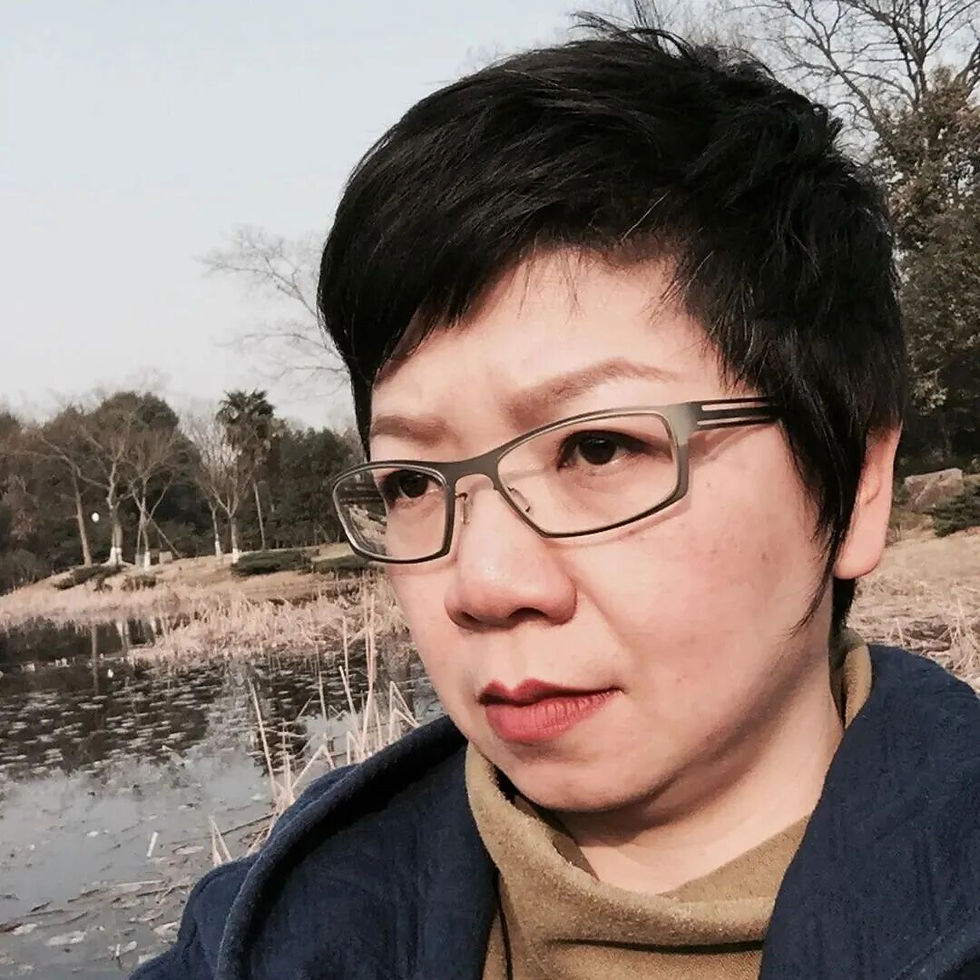
1971年生人,研究生学历,先后毕业于温州师范学院美术系和杭州师范大学美术学院。
Born in 1971, she holds a graduate degree and graduated from the Department of Fine Arts at Wenzhou Normal College and the College of Fine Arts at Hangzhou Normal University.
没有被文化塑造过的女性和男性是不存在的吧,虽然我也很想知道自己没有被塑造过的样子,但也清楚那是不可能的。
There are no women or men who have not been shaped by culture, are there? Although I would also very much like to know what I would be like if I had not been shaped, I also understand clearly that this is impossible.
为了探索自我的“真相”,我会努力识别出文化在我身上留下的印记,让自己被忽视,被限制的那些方面重新生长,像断齿处再长出新牙一样。
In order to explore the “truth” of the self, I will try to identify the marks that culture has left on me, and allow those parts of myself that have been neglected and restricted to grow again, like new teeth growing where broken teeth once were.
这不仅是作为一个女性在面对男权,也是作为一个人在面对一个不够人性的文化——比如父权文化所要去做的努力。
This is not only the effort I need to make as a woman in confronting patriarchy, but also the effort I need to make as a human being in confronting a culture that is not humane enough—for example, patriarchal culture.

独立艺术家/中国
Independent Artist / China
1979年出生于中国,从事绘画创作、自由摄影以及先锋诗写作。现为浙江画院中国工笔画研究所创作员、李可染画院青年画院院聘画家。
Born in China in 1979, She is engaged in painting, freelance photography, and avant-garde poetry. She is currently a creative artist at the Institute of Chinese Gongbi Painting at the Zhejiang Academy of Fine Arts and a painter appointed by the Youth Academy of the Li Keran Academy of Fine Arts.
女性的“被塑造”是社会规训和全方位结构性的“围剿”。在男权文化下的所谓“正常的女性”,是一种约定俗成般的存在,是刻在所有人基因里的代码。仿佛有一个模具一般,符合,你就是“正常的女性”,不符合,你就“不正常”。最可怕的其实不是规训本身,而是规训最终完成了内化。当一个女人开始用男权社会提供的那套标准审判自己并审判其他女人,她甚至不需要一个男人站在面前,她自己就已经成为了那套系统的执行者。于是,“正常女性”不再只是一个外部要求,而变成了女性自己身体里的监控器:如何穿衣、如何说话、如何行走起卧……甚至如何优雅地衰老,都有一套提前写好的答案。
The “shaping” of women is a form of social discipline and an all-encompassing structural “siege.” Under patriarchal culture, the so-called “normal woman” exists almost as something established by convention, like a code engraved into everyone’s genes. It is as if there were a mold: if you fit it, you are a “normal woman”; if you do not, you are “abnormal.” The most frightening thing is actually not discipline itself, but the fact that discipline eventually becomes internalized. When a woman begins to use the standards provided by patriarchal society to judge herself and other women, she no longer even needs a man standing in front of her—she herself has already become an executor of that system. Thus, the “normal woman” is no longer merely an external requirement, but becomes a monitor inside women’s own bodies: how to dress, how to speak, how to walk, sit, and lie down… even how to age gracefully—there is already a set of answers written in advance.
由于男性是男权社会下,拥有结构性性别红利的既得利益者群体,所以,他们中极少有人会想主动去改变这种女男不平等的社会现状,男性对女性处境是无法做到共情的,即使是对自己的女性家人,究其原因是由于在现有社会框架下,只要女性和男性依然要囿于“婚姻”,必然会有立场不同和资源利益的博弈。没有反思能力和反抗能力的女性,同样会把一些错误代码和裹脚思维一代代的遗传下去,形成女性之间的“家族代际创伤”。
Because men are the group of beneficiaries who possess structural gender privileges under patriarchal society, very few of them will actively want to change the existing social inequality between women and men. Men are unable to truly empathize with women’s situation, even when it concerns the women in their own families. The underlying reason is that, within the existing social framework, as long as women and men remain confined within “marriage,” there will inevitably be differences in position and struggles over resources and interests. Women who lack the ability to reflect and resist will likewise pass down certain erroneous codes and foot-binding ways of thinking from generation to generation, forming “intergenerational family trauma” among women.
从占有物质资源多少来说,女性“天生就是无产阶级”,但女性却是“人类再生产”的唯一性别,是我们肉眼可见的“可以造人”的物种,甚至双雌(双雄不可以)都可以继续“生”健康正常的雌性,所以,从另外一个角度来讲,女性又是最具天生“资本”的、染色体完美的,是有“神性”的。但女性群体却在某种程度上持续着被“奴役”。在男权社会结构下,金钱、资源和权力在男性和男性之间流转,女性极少有机会占据核心位置。她们被分配到无数个以家庭为单元的系统里,团结被打散,无法形成合力。
In terms of the amount of material resources they possess, women are “born proletarians.” Yet women are the only sex responsible for “human reproduction”; they are, visibly, the sex capable of “creating human beings.” Even two females can continue to “produce” healthy and normal females, whereas two males cannot. Therefore, from another perspective, women possess the greatest innate “capital”; their chromosomes are perfect, and they possess a kind of “divinity.” Yet women as a group continue, to some extent, to be “enslaved.” Under a patriarchal social structure, money, resources, and power circulate between men and men, while women rarely have opportunities to occupy core positions. They are distributed into countless systems organized around the family as the basic unit; their solidarity is broken apart, making it impossible for them to form a collective force.
女性被分割成家庭单位以后,不只是失去了资源,也失去了彼此作为一个群体的政治主体性。而家庭,恰恰可能是这种分割最有效的基本单位。一个女人被分配成妻子、母亲、女儿、儿媳,她首先被要求成为某一个男人的妻子、某一个家庭的女儿或儿媳,而不是一个独立的人。女性被一个个家庭系统拆散之后,原本具有共同处境的女性,很容易被迫站在彼此的对立面:婆媳、妯娌、母女,甚至女人与女人之间的竞争,本质上都可能是在一个资源稀缺的父权结构里争夺有限的位置与权力,而不是在争夺真正作为人的自由。约翰·列侬和小野洋子共同创作署名的歌曲名 《Woman Is the Nigger of the World》(中文常译作,女人是世界的黑奴)很无奈,无论过去还是现在,都是一个残忍的事实。
Once women are divided into family units, they lose not only resources, but also their political subjectivity as a group. And the family may precisely be the most effective basic unit for carrying out this division. A woman is assigned the roles of wife, mother, daughter, and daughter-in-law. She is first required to become a particular man’s wife, a particular family’s daughter or daughter-in-law, rather than an independent human being. Once women are dispersed into separate family systems, women who originally share common circumstances can easily be forced to stand in opposition to one another: mothers-in-law and daughters-in-law, sisters-in-law, mothers and daughters, and even competition between women themselves may essentially be struggles over limited positions and power within a patriarchal structure of scarce resources, rather than struggles for genuine freedom as human beings. The song jointly credited to John Lennon and Yoko Ono, “Woman Is the Nigger of the World” (commonly translated into Chinese as “女人是世界的黑奴,” meaning “Woman Is the Black Slave of the World”), is painfully helpless in its expression. Whether in the past or today, this remains a cruel reality.
在《第二性》“成长”这部分,波伏瓦的一些观点我不认可:一、波伏瓦几次三番说到“女性是残缺”的,是“被阉割”的,只因为她们没有阳具,这些表达我十分不同意。二、书中关于“女性化”和“男性化”的定义,也过于狭隘和刻板印象了。我不认为简单舒适的发型和着装风格是“男性化”特征和“想当男人”。三、女性同性恋群体的恋爱模式,从根本上说,依然是对“异性恋”模版的复刻,这些都蛮值得研究的。
In the “Formative Years” section of The Second Sex, there are several of Beauvoir’s views that I do not agree with:
First, Beauvoir repeatedly describes women as “incomplete” and “castrated,” simply because they do not have a penis. I strongly disagree with these expressions.
Second, the book’s definitions of “femininity” and “masculinity” are also overly narrow and stereotypical. I do not believe that simple and comfortable hairstyles and styles of dress are “masculine” characteristics or indications that a woman “wants to be a man.”
Third, the romantic relationship patterns within female homosexual communities are, fundamentally, still reproductions of the “heterosexual” model. All of these issues are quite worthy of further study.
不可否认,波伏瓦的《第二性》在女性哲学研究上具有划时代的意义。但是,经典不是”神谕“。现在来看,书中的某些内容已经过时了,尤其我手里这本郑克鲁的译本,不推荐各位购买,书中有很多不恰当的用词,也许这恰恰就是由男性来翻译一个具有强烈‘精神男性’特质的女权主义者时,可能产生的弊端吧。书中有很多左右互搏和思维表达方面的混乱。但我并不认为阅读经典的意义,是寻找一个绝对正确、不可质疑的“女权主义圣经”。恰恰相反,真正有生命力的思想,应该允许后来者站在它的肩膀上继续反驳它。波伏瓦让我看到女性是如何被制造出来的,而我更想继续追问的是:谁在制造?通过什么制度制造?这种制造又是如何进入女性自己的身体以及思想中的。对经典最好的继承,从来不是膜拜,而是继续拆解。
It is undeniable that Beauvoir’s The Second Sex has epoch-making significance in the philosophical study of women. But classics are not “divine revelations.” Looking at it today, some parts of the book have already become outdated. In particular, I do not recommend that anyone buy the Zheng Kelu translation that I have in my hands. There are many inappropriate word choices in the book. Perhaps this is precisely one of the problems that can arise when a man translates a feminist with strongly “spiritually masculine” characteristics.There are many instances in the book where different arguments contradict one another, as well as confusion in its thinking and expression. But I do not believe that the meaning of reading classics lies in searching for an absolutely correct and unquestionable “feminist Bible.” Quite the opposite: ideas that truly possess vitality should allow later generations to stand on their shoulders and continue to challenge and refute them. Beauvoir allowed me to see how women are made. What I want to continue asking is: Who is doing the making? Through what institutions are women made? And how does this process of making enter women’s own bodies and minds? The best way to inherit a classic has never been to worship it, but to continue dismantling it.
南波腕(化名)
Nanbo Wan (pseudonym)
女性至上主义研究者、独立艺术家/冰岛
Feminist scholar, independent artist / Iceland
最近重新读了一遍波伏娃的《第二性》。这本书是我多年前的女权启蒙书之一,但现在我自认为,自己已经走在它的前面了。
Recently, I reread Simone de Beauvoir’s The Second Sex. This book was one of my feminist awakening texts many years ago, but now I consider myself to have already moved beyond it.
我发现,波伏娃的言语里其实也有浓重的厌女思维,她甚至在某种程度上厌恶自己作为女性的现实。另外,这个书名《第二性》,我就十分不喜欢。女性分明是“第一性”!是比男性群体普遍更文明、更美好的物种,为什么要自贬身价,把自己定义为“第二性”?甚至还要拉着所有女性一起接受这个定义?
I found that Beauvoir’s language actually contains a strong misogynistic way of thinking. To a certain extent, she even seems to resent the reality of herself as a woman. In addition, I strongly dislike the title The Second Sex. Women are clearly the “first sex”! Women, as a group, are generally more civilized and more beautiful than men, so why degrade ourselves and define ourselves as the “second sex”? And why pull all women into accepting this definition together?
世界诞生于女性的阴道,却往往从这里开始,成为了刺向女性的尖刀。女性在男权社会里,是一个长期被污名化、被区别对待、被忽视、被剥夺资源和话语权的群体。
The world is born through women’s vaginas, yet very often it is from this very place that the sharp blade directed against women begins. In patriarchal society, women are a group that has long been stigmatized, treated differently, ignored, and deprived of resources and the right to speak.
男性和女性的生存处境、利益位置和思维构造,本来就存在巨大的差异。双方站在完全不同的立场上,本质上是跨性别、跨利益位置的博弈方。因此,男性不可能替女性真正、完整地思考女性的问题。甚至在我看来,人类社会最大的阶级对立,未必是“资本家和无产阶级”,而是“男与女”。这个世界的很多制度、规则、资源分配和文明秩序,本质上都建立在男性对女性的长期统治之上。
The living conditions, positions of interest, and structures of thought of men and women are already vastly different. The two sides stand in completely different positions and are, in essence, parties in a struggle across sex and across positions of interest. Therefore, men cannot truly and fully think about women’s issues on behalf of women. In my view, the greatest class opposition in human society may not necessarily be “capitalists and the proletariat,” but “men and women.” Many of the world’s institutions, rules, systems of resource distribution, and structures of civilization are fundamentally built upon the long-term domination of women by men.
西方很多所谓的“女权主义”,其实不过是自由男权派生出来的一种“畸形女权主义”。这不是女权主义,相反,这是“自由堕落派”的自由男权主义。她们无限性化自己,以为这就是获得自由,最后变成所谓“反客为主”的“自由人”:我不被强奸,我要主动选择强奸你们男人;我要走你们男人的路,甚至要比你们男人更过分、更夸张、更肆无忌惮。毕竟,向下滑的堕落太容易了,加入男权就可以,性开放就可以,把男性定义的“自由”重新包装一下,也可以。
Much of what is called “feminism” in the West is actually nothing more than a kind of “deformed feminism” derived from liberal patriarchy. This is not feminism. On the contrary, it is the liberal patriarchy of the “freedom-to-degenerate” camp. They endlessly sexualize themselves and believe this means they have gained freedom, eventually becoming so-called “free people” who reverse the roles: I will not be raped; I will actively choose to rape you men. I will walk the path men walk, and I will even go further than men—more excessive, more exaggerated, more unrestrained. After all, sliding downward into degeneration is too easy. One can simply join patriarchy, embrace sexual openness, and repackage the “freedom” defined by men.
真正的女权主义,恰恰不是要求女性获得和男性一样的堕落门票和资格,而是拒绝接受男性制定的游戏规则。为什么女性一定要进入男性设计好的游戏?
True feminism is precisely not about demanding that women receive the same ticket and qualification to degenerate as men. It is about refusing to accept the rules of the game created by men. Why must women enter a game already designed by men?
男人嘴里所说的“人类”,很多时候根本不包括女人。女人只是供他们使用的工具:性工具、生育工具、家务工具、情绪工具,甚至是社会关系和身份包装的工具。
When men speak of “humanity,” very often women are not included at all. Women are merely tools for their use: sexual tools, reproductive tools, domestic labor tools, emotional tools, and even tools for social relations and identity packaging.
如果非得比个高低,能够让人类延续、能够创生新生命的女性,堪比男权社会自己幻想出来的“神”。女性不需要从脑袋生,也不需要从肋骨变出来。真正拥有创生能力的身体就在这里,偏偏拥有这种身体的人,却被整个父权文明长期定义成低等、残缺和需要被统治的存在。
If one insists on ranking the two, women, who are capable of continuing humanity and creating new life, are comparable to the “gods” imagined by patriarchal society itself. Women do not need to be born from a head, nor do they need to be made from a rib. The body that truly possesses the power to create life is right here, and yet the people who possess this body have long been defined by patriarchal civilization as inferior, incomplete, and in need of domination.
性统治的好处太多了。对男性而言,被统治的女性不只是意味着“性”,还意味着免费的子宫、免费的保姆、免费的情绪劳动、免费的出气筒、免费的照护劳动。孩子随父姓,财产向男性群体集中;甚至男同也可以寻找女人形婚,只为了获得一个合法的社会身份和一个女人的子宫以及不是他们生的但随他们姓的下一代。
There are too many benefits to sexual domination. For men, women under domination do not only mean “sex”; they also mean free wombs, free maids, free emotional labor, free punching bags, and free care work. Children take the father’s surname, and property becomes concentrated within the male group. Even gay men can look for women to enter marriages of convenience, simply to obtain a legitimate social identity, a woman’s womb, and a next generation that they themselves did not give birth to but that carries their surname.
从女性的生理角度来看,阴道本身首先是女性的生育通道,而不是一个天然为了满足男性性欲而存在的器官。男性把女性的生殖器官重新命名成“性器官”,再把男性的性欲包装成“人类天性”,这本身就是男权文化最成功的意识形态之一。
From the perspective of female physiology, the vagina is first and foremost a reproductive passage for women, not an organ that naturally exists to satisfy male sexual desire. Men renamed women’s reproductive organs as “sexual organs,” and then packaged male sexual desire as “human nature.” This itself is one of the most successful ideologies of patriarchal culture.
波伏娃说“女性是被阉割的”,这种说法在今天看来非常落后,我完全不同意。仿佛女性因为没有阳具,所以是残缺的,那为何不说男性是残缺的,因为他们天生没有子宫?女性不是少了阳具的男性,女性是拥有另一套完整生理结构的主体。
Beauvoir says that “women are castrated.” From today’s perspective, this idea is extremely outdated, and I completely disagree with it. It is as if women are incomplete because they do not have a penis. Then why not say that men are incomplete because they are naturally without a uterus? Women are not men who lack a penis. Women are subjects who possess another complete physiological structure.
我认为女性是“第一性”。对于承担人类再生产、能够孕育新生命的物种而言,女性甚至接近“神”,或者至少是半神。只不过,这种生命能力长期被另一个更加野蛮的性别群体以及男权制度所裹挟、占有和统治。
I believe women are the “first sex.” For the sex that undertakes human reproduction and can gestate new life, women even approach the status of “gods,” or at least demigods. It is simply that this life-producing capacity has long been hijacked, possessed, and controlled by another, more barbaric sex and by patriarchal institutions.
男性群体对女性的子宫,或许始终存在一种深层的恐惧:他们自身没有创生能力和亲子确定性。所以,男权社会必须不断贬低女性、控制女性、占有女性的生殖能力。一个不自信、没有反抗能力、被驯化的女性,才是继续成为男权社会最好用的工具。
Perhaps the male group has always had a deep fear of women’s wombs: men themselves do not possess reproductive power or certainty of biological parenthood. Therefore, patriarchal society must continually degrade women, control women, and occupy women’s reproductive capacity. A woman who lacks self-confidence, lacks the ability to resist, and has been domesticated is the most useful tool for the continuation of patriarchal society.
其实从波伏娃书中的很多文字来看,她相当了解女性的生理构造和女性经验。她的同性性经验也显然影响了她对女性身体和性关系的理解。但《第二性》“成长”这一部分里,从弗洛伊德式精神分析角度切入性与身体的内容实在太多,其中不少描写今天读起来令人不适。
In fact, from many passages in Beauvoir’s book, it is clear that she understood female physiology and women’s experiences quite well. Her homosexual experiences also clearly influenced her understanding of women’s bodies and sexual relationships. But in the “Formative Years” section of The Second Sex, there is far too much discussion of sexuality and the body from a Freudian psychoanalytic perspective, and much of it feels uncomfortable to read today.
尤其所谓“男扮女装”之类的想法,在我看来过于狭隘,也带有非常明显的性别刻板印象。一个女人穿男性服装、剪短头发、选择简单舒适的生活方式,为什么就一定意味着她“想成为男人”?反而是她所说的男装更加简便、方便,不以装饰身体为第一目的,不把女性身体当作一个需要供人欣赏、陈列和消费的物品——这一点,我反而非常认同。
In particular, ideas such as so-called “cross-dressing as a man” seem to me too narrow and clearly marked by gender stereotypes. If a woman wears men’s clothing, cuts her hair short, or chooses a simple and comfortable way of life, why must this mean that she “wants to become a man”? On the contrary, Beauvoir’s observation that men’s clothing is simpler and more convenient, that it does not take the decoration of the body as its primary purpose, and that it does not treat the female body as an object that must be admired, displayed, and consumed—this is something I strongly agree with.
至于什么是“女性化”、什么是“男性化”,我甚至认为,问题根本不应该停留在服装、发型和举止这些表面符号上。真正值得讨论的是:什么是文明,什么是野蛮;什么是主体,什么是客体;什么是自由,什么是驯化。
As for what is “feminine” and what is “masculine,” I even think the question should not remain at the superficial level of clothing, hairstyles, and behavior. What is truly worth discussing is: What is civilization, and what is barbarism? What is a subject, and what is an object? What is freedom, and what is domestication?
女性的“后天形成”,从来不是单独由某一个男人完成的,而是家庭、社会、制度和文化共同完成的,其中当然也包括女性个体自身的自我异化和顺从附庸。男权最厉害的地方,从来不是男人站在女人面前命令她,而是有一天,女人开始站在镜子前,用男权的尺子检查自己。
The “formation” of women is never completed by any single man. It is jointly produced by family, society, institutions, and culture, and of course also includes women’s own self-alienation, submission, and dependency. The most powerful thing about patriarchy has never been a man standing in front of a woman and ordering her around. It is the day when a woman begins to stand in front of the mirror and measure herself with patriarchy’s ruler.
不要在男权体系里争一个更好的位置,而是开始拒绝进入这个体系。拒绝被男性定义,拒绝被男性消费,拒绝被婚姻制度收编,拒绝把自己的身体、生育能力和情感劳动继续当作男权社会的公共资源。女人不是“第二性”。女人甚至不需要证明自己是“第一性”。女人首先就是人,是主体,是不需要通过男性来获得合法性的完整存在。女性是能进行人类再生产的唯一性别。
Do not fight for a better position within the patriarchal system. Begin instead by refusing to enter that system. Refuse to be defined by men, refuse to be consumed by men, refuse to be absorbed into the institution of marriage, refuse to continue treating your body, reproductive capacity, and emotional labor as public resources for patriarchal society. Woman is not the “second sex.” Woman does not even need to prove that she is the “first sex.” Woman is first of all a human being, a subject, a complete existence that does not need men in order to acquire legitimacy. Women are the only sex capable of human reproduction.
所以我越来越认同一种更彻底的女性主义立场:女人要么成为女权主义者,要么成为女奴主义者!没有第三条路。
Therefore, I increasingly agree with a more radical feminist position: A woman either becomes a feminist, or she becomes an advocate of women’s enslavement. There is no third path.
日月星辰(化名)
Ri Yue Xingcheng (pseudonym)
作家、独立艺术家/日本
writer and independent artist / Japan
一,不喜欢《第二性》这个书名,有一种屈辱感。我是女性,我就是第一性。要我说,该叫《第一性》,大气磅礴。
First, I do not like the title The Second Sex. It gives me a sense of humiliation. I am a woman, and I am the first sex. If it were up to me, the book should be called The First Sex—grand and magnificent.
二,不喜欢波伏娃这个人,因为她太爱男了。人们一提到她,就把萨特她俩扯到一起,说俩人是”灵魂伴侣”。女人,为什么要给男人抬咖?男人作为第二性,也配给你当伴侣?不如找一片云当伴侣——来去自由,我还觉得你品格高洁。
Second, I do not like Beauvoir as a person, because she was far too devoted to men. Whenever people mention her, they immediately bring Sartre into the conversation and call the two of them “soulmates.” Woman, why do you have to raise a man’s status? Men, as the second sex, are hardly worthy of being your companions. You would be better off taking a cloud as your companion—coming and going freely. I would even think that showed greater integrity.
三,书的内容太啰嗦,建议直接看最后一章《独立的女人》。这段话很不错:女人正是通过工作跨越了与男性隔开的大部分距离,只有工作才能保证她的具体自由。一旦她不再是一个寄生者,建立在依附之上的体系就崩溃了;在她和世界之间,再也不需要男性中介。
Third, the book is too long-winded. I suggest going straight to the final chapter, “The Independent Woman.” This passage is very good: “It is through work that woman has largely crossed the distance that separated her from man; work alone can guarantee her concrete freedom. Once she ceases to be a parasite, the system based on her dependence collapses; between her and the world, there is no longer any need for a male intermediary.”
当代女性要想真正独立,我只说一句话:让男人闪一边去,别挡道。
If contemporary women truly want independence, I have only one thing to say: Men, move aside. Stop blocking the way.
- END -


Comments